Full Programme Details
The Zimbabwe Association of Church-related Hospitals (ZACH) implements the Voluntary Medical Male Circumcision (VMMC) program in seven districts in Zimbabwe as a sub awardee of the U.S. President’s Emergency Plan for AIDS Relief (PEPFAR) grant awarded to ZimTTECH. ZACH is part of the ZAZIC consortium, which consists of 3 partners, ZimTTECH, ZiChiRe, and ZACH, with ZACH and ZiChiRe serving as the implementing partners and ZimTTECH providing oversight and technical support to the program.
21 VMMC static sites are operational in the 7 districts supported by ZACH, (Gokwe South, Hurungwe, Lupane, Marondera, Mberengwa, Mbire and Zaka). ZACH implements the program using an integrated model, in which the Ministry of Health and Child Care (MOHCC) staff are the primary implementers and are supported by seconded partner staff who provide technical assistance and direct service delivery in the supported districts.
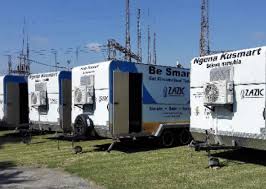
Each static site has a program vehicle, and VMMC partner staff (a nurse and a driver) are seconded to support the MOHCC site staff in implementing the program. All the static sites have been capacitated to offer quality VMMC services both at the static site and on an outreach basis. Ongoing is the capacity-building of all facilities in each district to offer VMMC services independently.
District | VMMC Static Sites |
Gokwe South | Gokwe District Hospital, Kana Mission Hospital, Sai Clinic, Sessami Baptist Clinic, Tongwe Clinic |
Hurungwe | Karoi District Hospital, Chidamoyo Mission Hospital, Hurungwe Rural Hospital, Mwami Rural Hospital, Tengwe Clinic |
Lupane | St Luke’s Mission Hospital, St Paul’s Mission Hospital |
Marondera | Igava Clinic, Mahusekwa District Hospital, Marondera Provincial Hospital |
Mbire | Chitsungo Mission Hospital, Mahuwe Rural Health Centre |
Mberengwa | Masase Mission Hospital, Mberengwa District Hospital, Mnene Mission Hospital, Musume Mission Hospital |
Zaka | Bota Rural Hospital, Ndanga District Hospital, Musiso Mission Hospital |
Program Achievements Last 5 Years
The goal of the VMMC program in Zimbabwe is to circumcise 1,4 million men aged 15 years and above and maintain an 80% country coverage to achieve epidemic control. ZACH achieved its annual targets in three of the last 5-year implementation periods and only fell short in FY 2019 and FY 2020 because of the COVID-19 pandemic. Two supported districts, Lupane and Mbire, have already reached 80% circumcision coverage.
Fiscal Year | Target MCs | % Achievement |
COP 18 | 66,000 | 103% |
COP 19 | 64,000 (42,000) | 48% (74%) (Target later reduced due to COVID-19) |
COP 20 | 41,000 | 64% (Program pause due to COVID-19 lockdowns) |
COP 21 | 29,000 | 101% |
COP 22 | 29,000 | 103% |
Demand Creation Strategies
ZACH has utilized innovative mobilization strategies, targeting older boys and young men, especially those in higher school grades, out-of-school youths, and self-employed men in small-scale mines, the agricultural sector, and rural communities. A considerable investment has been made in supporting a variety of mobilization strategies, which include:
Recruitment, training, and incentivizing community mobilisers
‘Bring-a-Buddy’ initiative at workplaces
Program awareness roadshows
Musical and soccer galas
Door-to-door campaigns
Community dialogues
School textbook & soccer jersey support initiative
Moonlighting
Device Circumcisions (Shang Ring)
All ZACH-supported districts provide quality, safe VMMC services using the WHO-approved, MOHCC-recommended dorsal slit surgical method. In 2021, the MOHCC approved the use of the Shang Ring device method to replace the Prepex® device method, and two ZACH-supported districts (Marondera and Mberengwa) began offering device MCs in May 2021. Uptake of the Shang Ring device has been very popular, especially among employed youth, who can continue their duties without needing time off. The rollout of the device MC method to all supported districts is ongoing.
Two-Way Texting (2WT)
The VMMC program quality standards require that all clients be followed up at least once after the MC procedure. 99% of clients are reviewed on day 2 and day 7 postoperatively. To reduce physical contact between staff and clients during the COVID-19 era, ZACH introduced the Two-Way-Texting (2WT) method of reviewing clients in March 2021. This method is offered to eligible clients who have mobile phones and are willing to be reviewed via text messages. The 2WT method of review has been adopted by the MOHCC, and rollout to all districts is ongoing. Low phone ownership among younger clients and erratic phone networks in some rural sites are challenges.
Collaboration with Traditionally Circumcising Tribes (Varemba Camps)
ZACH, in collaboration with the National AIDS Council (NAC) and with support from the MOHCC and the District Administrator’s offices, has successfully collaborated with the Varemba traditionally circumcising tribe and held periodic medical circumcision camps in Mberengwa, Gokwe South, and Mbire districts. Previously, the Varemba tribe conducted their traditional initiation and circumcision camps privately, without medically trained staff and with inadequate quality and safety standards as recommended by WHO and MOHCC. Through this collaboration, more than 3,000 young Varemba men have been circumcised by trained doctors and nurses in the camps, while they have undergone their initiation rituals since 2017. The success of these joint camps has been documented as one of the program's best practices.
VMMC Program Sustainability
The Zimbabwe VMMC program is transitioning into sustainability, and two ZACH-supported districts (Lupane and Mbire) have already reached 80% circumcision coverage. ZACH is supporting the transition to sustainability through the following activities:
Migrating from disposable surgical kits to reusable instruments. Zaka, Lupane, and Gokwe South districts have been capacitated in autoclaving and are now using reusable VMMC kits.
Transitioning from the Cost Reimbursement funding system to the Results-Based Funding system (RBF). Lupane has moved to RBF, and other supported districts are migrating to RBF in line with MOHCC policy and timelines.
Virtual VMMC training and pre-service training support. ZACH has a complement of certified national and provincial trainers who are active in the rollout of virtual VMMC training and mentorship.
Mobilizer support and retention. ZACH supports the training and retention of community mobilizers through continuous identification, recruitment, training, and incentivization of mobilizers, especially Village Health Workers (VHWs), Environmental Health Technicians (EHTs), and community-based VMMC champions.
ZACH is enhancing HIV prevention, care, and treatment support services offered by the Ministry of Health and Childcare (MOHCC), with support from the U.S. President’s Emergency Plan for AIDS Relief (PEPFAR) through the Centers for Disease Control and Prevention (CDC). Zimbabwe Association of Church-related Hospitals (ZACH) is present in five provinces (Harare, Mashonaland East, Mashonaland West, Mashonaland Central, and Matabeleland North) and supports 76 direct service delivery (DSD) sites, 13 technical assistance (TA) sites, and 7 community posts. All five ZACH-supported provinces have brought into practice client-centered services that cover the whole HIV cascade for both adults and children. These services include Prevention of Mother-to-Child Transmission (PMTCT), Visual Inspection with Acetic Acid and Camera (VIAC) screening, TB Preventive Therapy (TPT), and TB treatment, among others.